


Clinic management is the coordination layer between clinical care and the many small tasks that support it. Appointment flow, room readiness, sterilisation, inventory, documentation and patient communication can each work well alone yet still create delays when handoffs are unclear।
Where daily flow breaks
A practical operating system reduces dependence on memory. It does not need enterprise software; it needs visible priorities, defined owners and a short review rhythm. Clinical protocols must always follow applicable professional and infection-control requirements, while this guide focuses on non-clinical coordination।

Build a workable operating rhythm
Opening readiness check करें
First appointment से पहले reception, treatment room, sterilisation area और essential supplies की readiness confirm करें। Checklist short रखें और exceptions के लिए clear escalation path दें।
Schedule को work map की तरह पढ़ें
Only appointment times नहीं, procedure duration, room need, lab dependency, accessibility need और planned buffer देखें। Patient details को minimum necessary access के साथ handle करें।
Handoffs visible बनाएँ
Reception-to-assistant और assistant-to-dentist handoff में next action, owner और deadline clear हों। Sensitive information open boards पर न लिखें।
Interruptions के लिए rule बनाएँ
Urgent calls, late arrivals, equipment issues और walk-ins के लिए pre-agreed response रखें। हर exception dentist तक पहुँचाना जरूरी नहीं; escalation levels तय करें।
End-of-day close करें
Pending follow-ups, lab work, payment status, room reset और next-day risks को दस मिनट में review करें। Unfinished item के साथ owner और date भी लिखें।
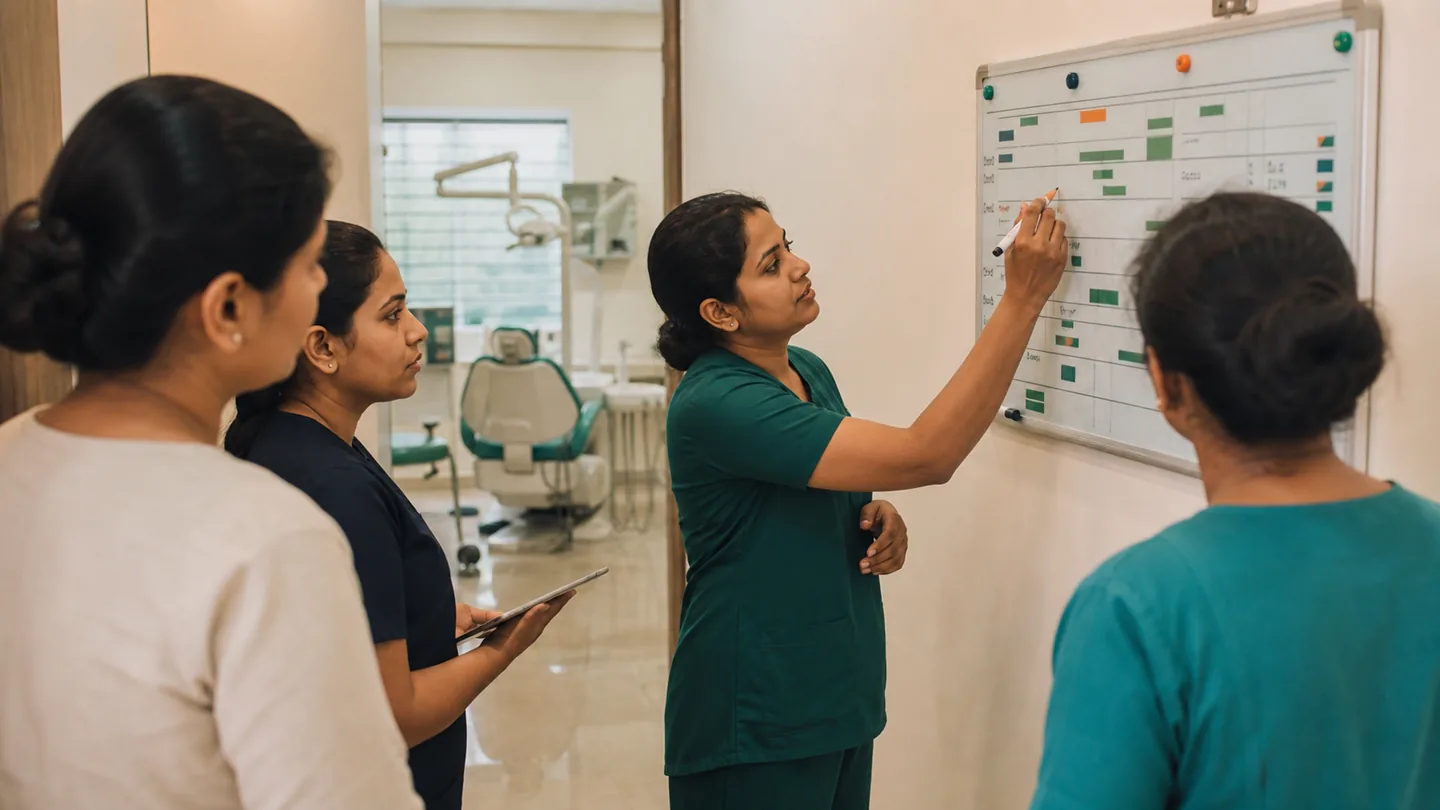
A schedule-day scenario
एक morning में first case लंबा हो जाता है और अगला patient समय पर पहुँचता है। Organised clinic में reception updated wait estimate देती है, assistant next room तैयार रखता है और schedule owner downstream slots देखता है। Verbal guessing की जगह shared response patient experience को calmer रखता है।
A practical 30-day implementation rhythm
Days 1–7: observe the current state
पहला phase baseline समझने का है, solution announce करने का नहीं। तीन recent examples collect करें and specifically देखें कि “Opening readiness check करें” कहाँ clear है, कहाँ missing है और किस role को information दोबारा ढूँढनी पड़ती है। इस phase में staff performance score न करें; workflow, tools and handoffs को document करें।
Days 8–14: define the smallest standard
इसके बाद one shift or one patient-flow segment पर controlled version तैयार करें। “Schedule को work map की तरह पढ़ें” और “Handoffs visible बनाएँ” को short prompts में translate करें। Each prompt के साथ owner, backup, deadline and escalation condition लिखें। Clinical judgement or patient choice को rigid administrative target में convert न करें।
Days 15–21: run a limited pilot
Week three में change को narrow scope पर चलाकर actual handoffs observe करें। Intended sequence—Opening check → Visible schedule → Room handoff → Closing review—team को briefing में explain करें। जब sequence टूटे, work-around छिपाने के बजाय exception note करें। यही notes बताएँगे कि checklist, staffing, timing or information access में कौन-सा adjustment practical है।
Days 22–30: review and decide
अंत में metrics, exceptions और team notes साथ रखकर decision document करें। शुरुआत में “On-time room readiness” और “Appointments starting within planned window” देखें, but isolated number को success claim न बनाएं। Patient privacy, workload, quality and local context साथ consider करें। Helpful change को editable SOP में रखें and next review date name करें।
Two questions before you standardise it
What should the clinic do first?
वह step चुनें जिसे team रोज़ देख सकती है and जिसकी ownership अभी unclear है। इस guide में practical starting point “Opening readiness check करें” है, लेकिन clinic context अलग हो तो smaller adjacent step चुनना बेहतर हो सकता है। One owner, one observation window and one review date enough हैं।
How do we keep the system safe and useful?
Minimum necessary patient information use करें, clinical decisions qualified professionals के control में रखें and finance, legal or advertising questions current guidance के साथ verify करें। अगर pilot workload बढ़ाता है, patient choice restrict करता है or staff को important exception hide करने पर मजबूर करता है, pause and redesign करें।
Operational traps
- Checklist को बहुत लंबा बनाना
- हर task का owner dentist रखना
- Late-running schedule छिपाना
- Closing review के बिना pending work छोड़ना
Signals for the daily review
इन indicators को isolated targets की तरह use न करें। Trend, clinic context, patient choice और team capacity साथ देखकर interpretation करें.
- On-time room readiness
- Appointments starting within planned window
- Unassigned pending tasks
- Recurring operational exceptions
Make the next shift clearer
Clinic management का best first step एक complete transformation नहीं है। Opening, handoff या closing में से सबसे unreliable moment चुनें, उसे map करें और दो सप्ताह तक same method से चलाएँ। फिर observed friction के आधार पर अगला change चुनें।