


A full calendar can still be a weak schedule. If visit types, room needs and realistic duration are not visible, small delays cascade into waiting, rushed handoffs and overtime।
Where daily flow breaks
Scheduling is not about forcing every appointment into a fixed slot. It is about matching planned work with available people, rooms and equipment while keeping clinical judgment flexible।

Build a workable operating rhythm
Visit types classify करें
Consultation, procedure, review and emergency assessment के broad scheduling needs अलग रखें।
Duration ranges use करें
One exact time for every case के बजाय realistic range and known dependencies note करें।
Resource conflicts देखें
Chair, assistant, imaging, lab collection or accessibility need slot confirm करने से पहले match करें।
Buffers purposeful रखें
Complex blocks, sterilisation turnaround and likely overruns के around small buffers place करें।
Change communication define करें
Delay होने पर who informs patient, what estimate is shared and when escalation occurs स्पष्ट रखें।
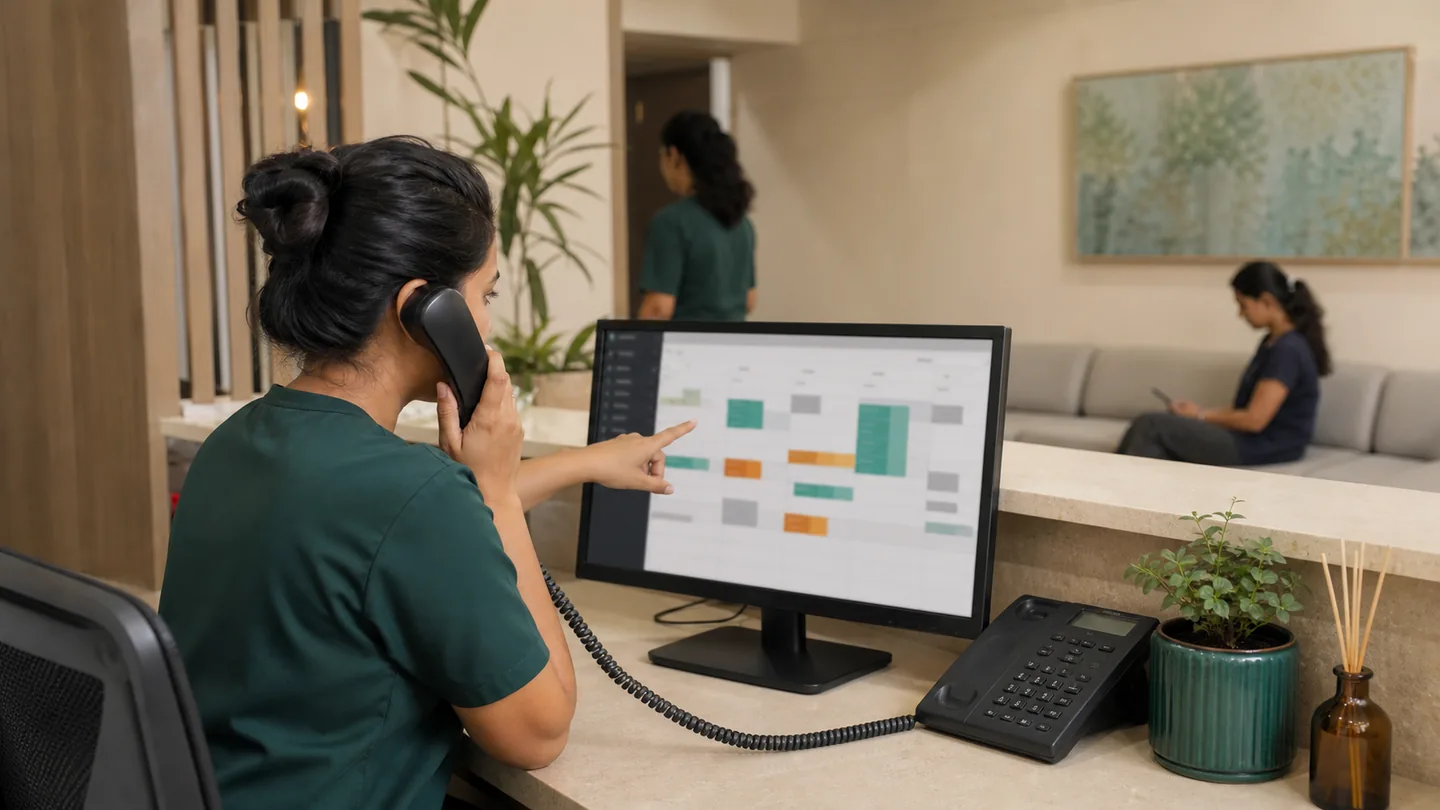
A schedule-day scenario
Morning procedure overruns by twenty minutes. A resource-aware schedule shows the next room available and identifies which appointment can start on time, while reception gives an honest update rather than repeated vague waiting।
A practical 30-day implementation rhythm
Days 1–7: observe the current state
Implementation की शुरुआत recent examples से करें, assumptions से नहीं। तीन recent examples collect करें and specifically देखें कि “Visit types classify करें” कहाँ clear है, कहाँ missing है और किस role को information दोबारा ढूँढनी पड़ती है। इस phase में staff performance score न करें; workflow, tools and handoffs को document करें।
Days 8–14: define the smallest standard
Week two में workflow का smallest repeatable version बनाएं। “Duration ranges use करें” और “Resource conflicts देखें” को short prompts में translate करें। Each prompt के साथ owner, backup, deadline and escalation condition लिखें। Clinical judgement or patient choice को rigid administrative target में convert न करें।
Days 15–21: run a limited pilot
अगले सात दिन process को real work में test करें, ideal conditions में नहीं। Intended sequence—Classify visit → Match resources → Add buffer → Update patients—team को briefing में explain करें। जब sequence टूटे, work-around छिपाने के बजाय exception note करें। यही notes बताएँगे कि checklist, staffing, timing or information access में कौन-सा adjustment practical है।
Days 22–30: review and decide
चौथे सप्ताह में result को context के साथ पढ़ें और next review date set करें। शुरुआत में “Start-time variance” और “Recurring overrun by visit type” देखें, but isolated number को success claim न बनाएं। Patient privacy, workload, quality and local context साथ consider करें। Helpful change को editable SOP में रखें and next review date name करें।
Two questions before you standardise it
What should the clinic do first?
वह step चुनें जिसे team रोज़ देख सकती है and जिसकी ownership अभी unclear है। इस guide में practical starting point “Visit types classify करें” है, लेकिन clinic context अलग हो तो smaller adjacent step चुनना बेहतर हो सकता है। One owner, one observation window and one review date enough हैं।
How do we keep the system safe and useful?
Minimum necessary patient information use करें, clinical decisions qualified professionals के control में रखें and finance, legal or advertising questions current guidance के साथ verify करें। अगर pilot workload बढ़ाता है, patient choice restrict करता है or staff को important exception hide करने पर मजबूर करता है, pause and redesign करें।
Operational traps
- Every slot equal रखना
- Emergency capacity zero रखना
- Patient arrival pattern ignore करना
- Delay updates देर से देना
Signals for the daily review
इन indicators को isolated targets की तरह use न करें। Trend, clinic context, patient choice और team capacity साथ देखकर interpretation करें.
- Start-time variance
- Recurring overrun by visit type
- Resource conflicts
- Late change communication
Make the next shift clearer
Begin with one week of schedule observations. Adjust only the visit types that repeatedly diverge from plan, and keep buffers visible so the team understands their purpose।